

How Do You Get Verrucas? Practical Habits For Shared Spaces
How do you get verrucas? Our pharmacist explains how they spread and the practical steps you can take at home and at the pool.
Quick Answer
Verrucas are caused by types of human papillomavirus, or HPV. The virus can pass through skin contact and contaminated surfaces or objects. Wet or damaged skin makes spread easier, and a visible wart may appear long after contact. You often cannot identify the exact source. Use separate personal items, protect feet in communal spaces and avoid picking affected skin.
Finding a foot wart can send you mentally back through every swim, gym visit or shared bathroom. Usually there is no reliable way to identify one person, place or day as the source. The more useful question is what you can do next.
At Heald Green Pharmacy, our pharmacist can help you turn prevention guidance into practical foot care. Ask us about pool footwear, coverings, shared items or a mark you are unsure about. We can discuss everyday precautions and suitable care for an affected foot, without assuming that one person, household or swimming pool caused the problem.
Verrucas Come From A Common Virus
The viruses involved in ordinary skin warts belong to the HPV family. A verruca is a wart on the foot. Having one does not mean you have failed to keep yourself clean, and it does not tell you anything certain about another person’s hygiene.
The name HPV covers a wider family of viruses, so information about one HPV-related condition does not automatically apply to a foot wart. If something you have read worries or confuses you, ask our pharmacist to explain the distinction and put it in the context of your concern.
You can take sensible steps without trying to eliminate every possible contact. A manageable routine is more useful than repeatedly inspecting everyone’s feet or disinfecting every room because a small mark has appeared.
If you are not sure the mark is a wart, start with assessment. Prevention advice for a diagnosed condition should not become a reason to ignore a new, changing or painful foot lesion.
How Do You Get Verrucas In Shared Spaces?
The virus can spread through close skin contact and through contaminated surfaces or objects. Changing rooms and shared washing areas are familiar examples because feet and damp surfaces can come into contact. Exposure does not allow you to predict exactly who will develop a wart or when.
Wet or damaged skin can make spread easier. That is a reason to protect your feet and avoid picking, not a reason to assume that any visit to a pool is unsafe. Consider what small habits you can realistically maintain before and after activities.
- Use your own towel and personal footwear.
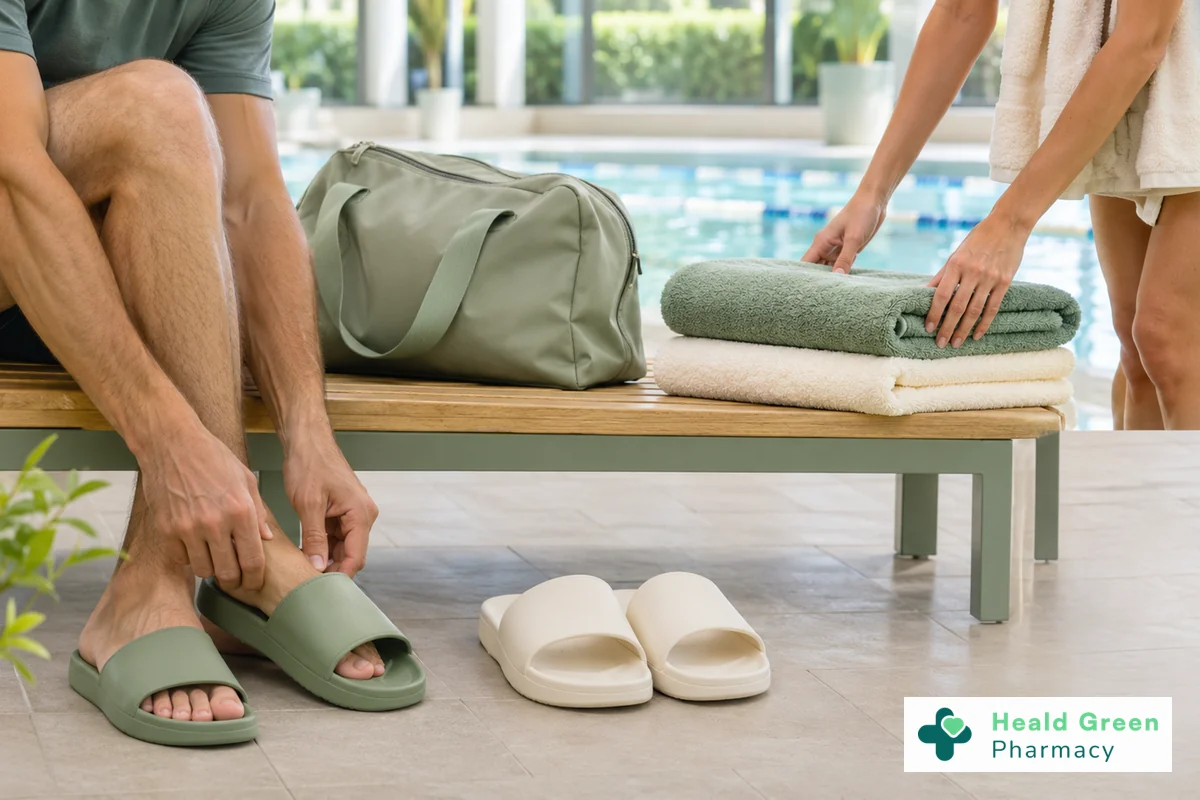
- Keep suitable pool slides in your swimming bag.
- Avoid walking barefoot in shared public areas if affected.
- Follow the facility’s advice about covering a wart.
- Ask for advice about broken or irritated skin.
You do not need to identify a single contaminated tile to make these habits worthwhile. They are practical precautions for shared spaces, not a guarantee against every exposure.
Verrucas Can Appear Long After Contact
A wart can take months to become noticeable after contact with the virus. The day you first spot a mark therefore cannot identify the day it was acquired. A recent holiday or swim may be memorable, but that does not prove it was the source.
This matters in families and friendships. It is easy to blame the last changing room visited or the person who borrowed a towel. Without reliable evidence, that conversation can create worry or embarrassment without improving anyone’s foot care.
Focus instead on what you know now. Is the skin intact? Is there pain? Has the area changed? Are personal items kept separate? Those questions support a useful plan without requiring a reconstruction of every contact over several months.
If several people have concerns, each can consult our pharmacist about their own skin. Similar-looking marks do not establish that everyone has the same diagnosis or needs the same treatment.
Reduce Contact With Verrucas At The Pool
A routine is easier to keep if the needed items are already in your bag. Keep your own towel and suitable pool footwear together, and follow the facility’s guidance about covering an affected area. Ask our pharmacist about appropriate care if the skin is broken or recovering from a procedure.
Avoid sharing footwear or towels just because you are with family or friends. This is about ordinary personal-item habits, not separating people or making someone feel unwelcome. A calm explanation is usually enough.
| Question | What To Discuss |
|---|---|
| Before Leaving Home | Pack your own towel, socks and suitable pool footwear. |
| At The Facility | Follow local rules about foot protection and covering affected skin. |
| After Changing | Keep personal footwear and towels with your own belongings. |
| If Skin Is Broken | Ask whether swimming is appropriate before entering the water. |
| Back At Home | Deal with used kit and prepare clean personal items for next time. |
If you are unsure which covering fits your activity, ask our pharmacist. We can explain suitable options for an affected foot and when broken or healing skin needs individual care. Avoid layering improvised products over irritated skin because a covering looks similar to one used by someone else.
Limit Verrucas Spreading Through Shared Items
At home, keep towels, socks and shoes for personal use. Change socks regularly and avoid passing used foot-care items between people. It helps to choose a simple place for everyone’s belongings rather than rely on remembering which towel belongs to whom.
If someone in the household has an affected foot, explain the practical routine without blame. You do not need to describe them as infectious in every interaction or make ordinary shared living feel unsafe. Concentrate on the personal items and skin contact that are relevant.
Wash your hands after touching a wart or applying treatment. Ask our pharmacist how to use and store any product so the routine is clear. Keep medicines away from children and follow the leaflet rather than leaving a treatment out beside general toiletries.
If a child is affected, ask for age-appropriate advice. An adult product or procedure should not automatically be copied for a child, even when the marks look similar.
Avoid Picking And Sharing Foot-Care Tools
Picking can damage the skin and is not a way to remove the underlying problem safely. Keep your hands away from the area as much as practical and wash them after necessary contact. If a treatment routine involves touching the skin, follow the product or clinician’s instructions.
Do not share files, blades or other tools used around the affected area. Do not dig at a mark to confirm that it contains a root or to see how deep it goes. A rough-looking patch should not be treated as an invitation to cut into the foot.
- Avoid scratching or peeling the lesion.
- Do not cut into a sore foot spot.
- Keep personal foot-care items separate.
- Wash hands after handling the affected area.
- Ask before using a product on damaged skin.
If you have already injured the skin, mention that when seeking advice. The next priority may be assessing the wound or irritation rather than continuing a removal attempt.
Do Not Assume Every Foot Mark Is A Verruca
Corns, calluses and other skin changes can resemble the problem you have been reading about. A prevention routine does not establish the diagnosis. If the mark is new, changing, painful or uncertain, ask someone qualified to assess it.
Describe the location, timing and effect on daily life. You may notice discomfort only in a certain shoe or a patch that returns after you try to remove hard skin. These details help the assessment without requiring you to identify the cause first.
Our older wart-removal guide covers treatment enquiries. Before moving from prevention to a treatment plan, make sure the area has been identified properly.
If you have diabetes, poor circulation, reduced feeling or immunity problems, explain that before self-treating. General internet advice is not a substitute for an individual foot-care plan in those circumstances.

What If A Wart Appears Despite Your Precautions?
Developing a wart does not prove that your routine failed or that you need a more extreme cleaning regime. Precautions reduce some opportunities for spread; they do not give complete control over exposure or how the skin responds.
Talk to our pharmacist about whether the area needs treatment. A confirmed, uncomplicated lesion that is not troublesome may be monitored. If discomfort, persistence or daily activities are an issue, we can discuss suitable products and our cryotherapy assessment service. Treatment is a separate decision from working out where the virus came from.
Bring information about products already used and explain your health history. Ask what care is suitable, how long to try it and when to return for advice. Avoid combining several removal products because you want to get rid of it quickly.
The useful result is a plan for your foot and your routine. You do not need to establish fault before asking for help or deciding what to do next.
Know Which Changes Need Professional Advice
Contact our pharmacist if a foot lesion bleeds, changes appearance, becomes increasingly painful or affects ordinary activities. An area that looks different should not automatically be treated as the same old wart. Tell the clinician what has changed and when.
If treatment has left broken skin, spreading redness, discharge or worsening pain, seek advice about that problem. Do not cover it with more product while waiting for an expected treatment deadline. A healthcare professional can assess whether the care plan needs changing.
- Mention any diabetes or circulation concerns promptly.
- Explain if you have reduced feeling in the foot.
- Name the treatment and when you used it.
- Describe symptoms rather than only sending a label.
- Ask which service should assess the concern next.
These details help the person advising you choose the right route. You do not have to be certain something is serious before asking about a worrying change.
Ask Us About Prevention And Foot-Care Questions
Visit us at 208 Finney Lane, Heald Green, SK8 3QA, with your foot-care questions. Our pharmacist can explain practical ways to reduce opportunities for spread, help you choose suitable personal-care items and discuss a mark that is bothering you. Tell us about any health conditions or treatment already used.
If you would like to explore treatment as well as prevention, consult our pharmacist about our cryotherapy service. We can assess suitability within our service and explain current appointments, fees and aftercare. Asking about spread does not commit you to a procedure; we will help you understand the options first.
Keep the next step proportionate: confirm an uncertain diagnosis, ask about symptoms and choose habits you can maintain. Understanding how spread can happen should leave you with useful actions, not blame or an impossible standard of avoiding every shared space.
Frequently Asked Questions
1. How Do You Get Verrucas From Other People?
The virus can spread through direct skin contact and contaminated surfaces or objects. You usually cannot identify one exact source or contact date.
2. Does Having One Mean My Feet Are Dirty?
No. It is a common viral skin problem. Practical personal-item and foot-protection habits are more useful than blame.
3. Can I Tell Which Pool Caused It?
Usually not. The mark may become visible long after contact, so the last pool visited is not reliable evidence of the source.
4. Should We Share Towels At Home?
Keep towels, socks and shoes for personal use if someone has an affected area. Use a simple household routine without making the person feel excluded.
5. Can I Pick It Off To Stop Spread?
Do not pick or cut it. That can damage the skin and does not provide a safe solution. Ask about appropriate assessment or treatment.
6. Do Precautions Guarantee I Will Not Get One?
No. They can reduce opportunities for spread but cannot guarantee prevention. Ask our pharmacist about a new mark that is painful, changing or uncertain.
Talk To Us About Your Next Step
Ask our pharmacist about prevention, comfortable foot care and a mark that concerns you. We can explain suitable products, practical precautions and our cryotherapy assessment service where appropriate. Contact us or book a consultation to discuss your questions with our team.
Important Information
This is general information for adults and does not replace individual medical advice. Outcomes are not guaranteed. Current appointments, suitability and charges need confirming with the service.
Clinically Reviewed by Pharmacy Mentor
A pharmacist reviews the content to help ensure medicines are presented responsibly and that patient-facing health information is accurate, appropriate, and aligned with current clinical guidance.
Written on behalf of Heald Green Pharmacy by Pharmacy Mentor.
Created: . Last editorial review: .
